
Expert Rhinoplasty in Dallas, TX, with Dr. Yash
Refresh, Restore, and Revitalize Your Appearance
Your nose is the central feature of your face, but it shouldn’t be the center of attention. Rhinoplasty is a highly customizable surgery designed to reshape your nose and improve facial symmetry. Beyond the cosmetic benefits, it can also correct breathing problems caused by an obstructed nasal airway.
Rhinoplasty requires extensive surgical expertise and a comprehensive understanding of facial anatomy. When performed by a skilled, board-certified plastic surgeon like Dr. Yash Avashia, this procedure can narrow a wide nose, reduce the size of a large or projecting nose, straighten a crooked or humped nose, or reshape the nasal tip. The aesthetic goal is to bring your nose into harmony with your other facial features for a natural, symmetrical result.
Dr. Yash has specialized training and extensive experience in performing rhinoplasty and other cosmetic and reconstructive facial surgeries. He applies his skill, aesthetic sense, and in-depth medical knowledge to produce beautiful and natural-looking results.
To learn more about how rhinoplasty in Dallas might benefit you, contact Dr. Yash Plastic Surgery to schedule a consultation.
What You Need To Know: Rhinoplasty
Why Might I Consider Rhinoplasty?
You may want to consider rhinoplasty if you are self-conscious about your nose because it:
- Is out of proportion with your face — too large or too small, too wide or too narrow
- Projects too far from your face
- Has a bulbous nasal tip or one that is upturned or drooping
- Has a hump you consider unattractive
- Is sunken or too low where it meets your eyebrows
- Is crooked, uneven, or asymmetrical
- Lacks or has too much definition
You might also want to pursue rhinoplasty if you have breathing problems caused by a defect like a deviated septum or an old injury that obstructs your airway.
As an expert in facial anatomy and aesthetics, Dr. Yash understands the many ways your facial features can be in or out of visual harmony. For example, a strong or weak chin can make your nose look too large or too small. He also respects the diversity of the human face and form, tailoring his approach to his patients’ anatomy and goals.
Types of Rhinoplasties
Cosmetic Rhinoplasty
A nose in balance with your eyes, cheeks, chin, and mouth enhances your appearance by improving symmetry and proportion. Alterations can include narrowing a wide nose, reducing the size of an overly large or projecting nose, correcting bumps or humps on the nasal bridge, refining the nasal tip, or straightening a crooked nose. Dr. Yash will create a surgical plan to suit your facial structure and aesthetic preferences, ensuring natural, balanced, and beautiful results.
Functional Rhinoplasty
Rhinoplasty can restore airflow if you have breathing problems resulting from anatomical issues like a deviated septum or collapsed nasal valves. Dr. Yash performs functional rhinoplasty for practical reasons, but it often has aesthetic benefits as well.
What to Expect
in Your Nose Surgery Consultation
Dr. Yash’s goal is to be fully transparent so you can make a confident and educated decision about how to proceed. When you meet with him, he will ask questions to understand what bothers you about your nose and your hopes for the surgery. He will examine your unique nasal structure – including the underlying bone, cartilage, and tissue – and consider the balance of your facial features. He will also review your medical history. A photographer will take images of your face from multiple angles, which will help plan the details of the surgery.
Dr. Yash will then create a rendering of your nose as if you had the rhinoplasty. This rendering is based on the detailed conversation you had with Dr. Yash, describing your goals. The purpose of this is to convey the “big picture” of what you can expect your nose to look like after surgery. Dr. Yash creates this rendering on the software himself so he can accurately depict what is realistically achievable with surgery. He will also show you pictures of other rhinoplasty patients who had similar concerns and goals to further clarify your wishes for the procedure and provide realistic expectations.
After Dr. Yash has gathered all this information, he will recommend how best to proceed. If rhinoplasty is the best solution for you, he will tell you what to expect before and after the surgery and describe the planned results. He will also review your rhinoplasty procedure cost with you and discuss payment options.
Dr. Yash Avashia’s Rhinoplasty Technique
Dr. Yash’s rhinoplasty technique is a unique blend of techniques, carefully designed to give safe, long-lasting, and natural results. His approach’s foundation is the open-structural approach. The focus of this approach is to reshape the framework of the nose (bone and cartilage) so the final shape follows accordingly. He uses the cutting-edge piezo-technology (ultrasonic energy device) to make meticulous changes and adjustments to the nose’s bones, thus protecting the rest of your anatomy but still achieving meaningful changes. He uses aspects of preservation techniques to manage the skin and soft tissue ligaments that truly help to create a natural final result with reduced swelling. In cases of weakened framework or prior surgery, Dr. Yash is a believer in using rib cartilage to reinforce and reshape the nose. While uses both approaches – autologous rib grafts and donor rib grafts. He customizes his approach based on the patient’s needs. Dr. Yash’s philosophy with rhinoplasty is to never leave the operating room till he’s satisfied with what he sees in front of him. That is his pledge to all his rhinoplasty patients.
What to Expect During and After Your Rhinoplasty
Dr. Yash is a partner at the Dallas Plastic Surgery Institute and will perform your procedure in the Institute’s state-of-the-art surgery center. The Institute is the top facility for aesthetic surgery in Dallas and among the best in the country. On surgery day, you will check in and meet with Dr. Yash and your anesthesia provider. Dr. Yash typically performs rhinoplasty under general anesthesia to ensure patient comfort throughout the procedure. Depending on the complexity, surgery can last from 2 to 4 hours.
You will be escorted to the operating room by a nurse and positioned comfortably on the operating table before you slowly fall asleep with general anesthesia. Dr. Yash works with some of the best anesthesia providers in Dallas, who are highly skilled in administering anesthesia and ensuring your experience is as smooth as possible.
At the end of surgery, you will have both internal and external nose splints along with stitches at the base of your nose, which is well hidden. While you recover, you can expect to experience swelling, bruising, and mild discomfort around your nose and eyes, which generally subsides within 3-5 days. A majority of patients typically feel completely normal by day 5 and a lot of this is because of Dr. Yashs’s technique in rhinoplasty.
Most patients can return to work and school after one week, avoiding strenuous exercise and contact sports for at least two weeks. Results take several months to fully emerge as swelling dissipates and the nose settles into its new shape.
Dr. Yash will provide detailed postoperative care instructions and closely monitor your healing to ensure optimal results.
What Can I Expect During Rhinoplasty Recovery?
Initial Recovery Period
Recovery from nose surgery is typically quick and relatively comfortable. While some short-term discomfort may occur, it’s easily managed with pain medication. For the first week, internal and external nose splints will help support your newly shaped nose as it heals. Minor bruising and swelling are common during this time and can usually be covered with makeup. Some residual swelling—especially in the mornings—may persist for a few months. Dr. Yash will provide detailed recovery instructions, including medication guidance and follow-up appointments.
Returning to Daily Activities
Most patients are able to return to work or school about one week after surgery, once the splint is removed. Light activities are permitted after two weeks, with a gradual return to more strenuous exercise over the following month. Swelling, bruising, and mild discomfort around the nose and eyes generally subside within two weeks. Dr. Yash may recommend continuing to wear internal and external splints for the first week to protect your results.
Your Final Results
Your nose will continue to refine as swelling decreases over the next several months. While early improvements are visible soon after surgery, final results typically emerge once the tissues have fully settled. Dr. Yash will monitor your progress closely to ensure proper healing and optimal aesthetic outcomes. Most patients achieve full recovery within one to three months.
Am I a Good Candidate for Rhinoplasty in Dallas, TX?
You are probably a suitable rhinoplasty candidate if you:
- are bothered by or self-conscious about the appearance of your nose
- have an obstruction in your nose that interferes with normal breathing
- are in good health
- do not smoke
- have realistic expectations for the procedure. (Rhinoplasty can improve the appearance of your nose and restore healthy breathing function. It can’t give you someone else’s nose.)
Cosmetic rhinoplasty is generally performed on adults and older teenagers, after the bone and cartilage structure of the nose has matured and stopped growing. Functional or reconstructive rhinoplasty can be conducted on younger patients to correct breathing problems or repair a significant defect.
Schedule Your Dallas Rhinoplasty Consultation
Dr. Yash is a board-certified plastic surgeon with specialized training and extensive experience in primary, revision, ethnic, preservation, ultrasonic, and reconstructive rhinoplasty, as well as other facial cosmetic and reconstructive surgeries. His surgical precision enables him to craft noses that look natural and function optimally.
Patients from Dallas and the surrounding communities trust Dr. Yash for his commitment to personalized care, artistic eye, and surgical excellence. He’ll take time to understand your goals and concerns and develop a surgical plan that aligns with your expectations while prioritizing safety and lasting results. If you are considering rhinoplasty to enhance your facial appearance or address nasal breathing issues, schedule your private consultation today.
Ready to begin your Aesthetic Journey?
Honesty and integrity are the cornerstones of Dr. Avashia’s process. He feels strongly that he needs to educate patients on what gives them the most value, and he focuses on what should be done instead of simply what could be done. He will only recommend procedures that will help achieve your goals. Dr. Avashia knows that not everyone “needs the knife,” and he will recommend nonsurgical solutions when appropriate in order to give you a more minimally invasive solution to achieve your goals.
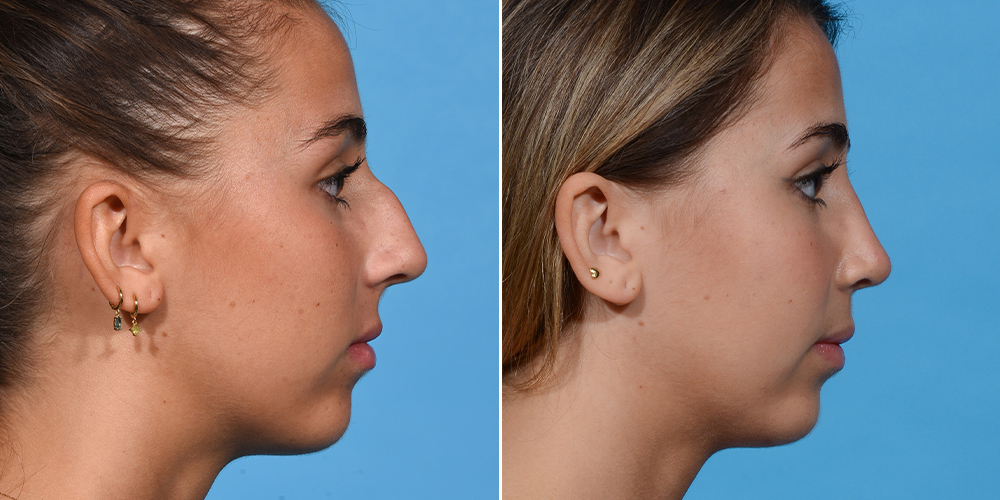
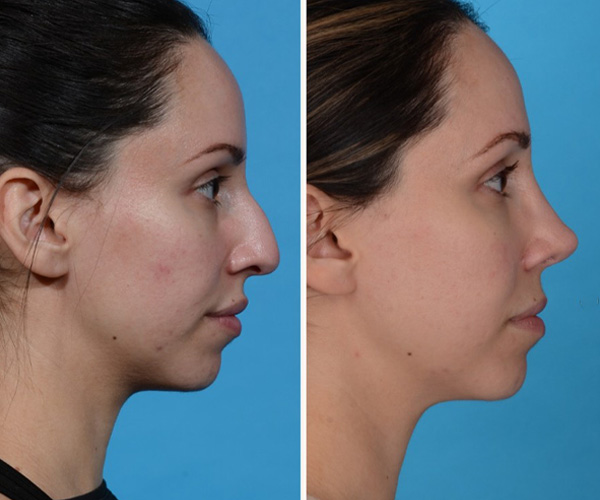
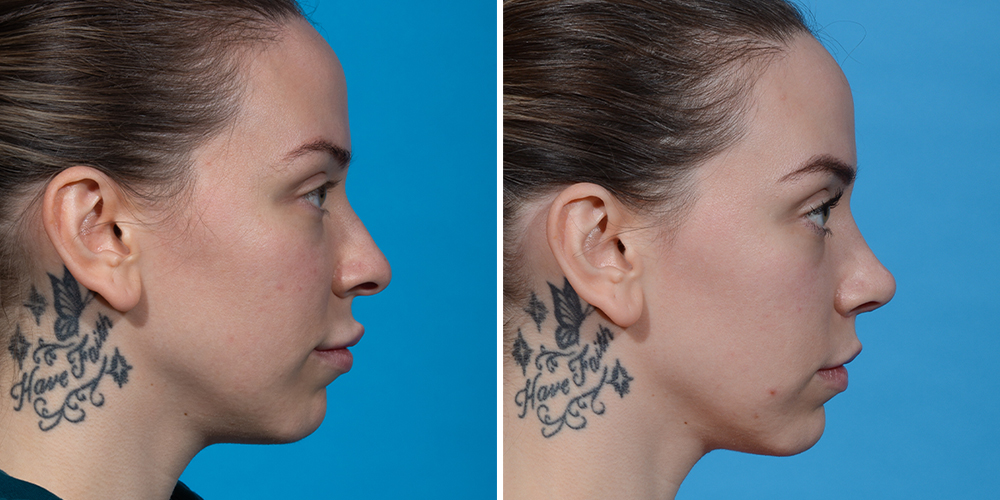
Rhinoplasty Results
FAQs About Rhinoplasty in Dallas, TX
Dr. Yash will give you pre-operative instructions for the days before your surgery. These will include a special skin-care program and anti-bacterial treatments for the inside of your nose.
Open rhinoplasty involves an incision along the thin ridge on the underside of your nose, between your nostrils. This incision will leave a faint scar, but it is well concealed by the contours of your nose and almost invisible after it is fully healed. Closed rhinoplasty leaves no external scars, as all the incisions are inside your nose.
Dr. Yash advises you to wait until your facial bones and nasal cartilage have stopped growing, typically at about age 16 for young women and 17 for young men. However, this age can vary. You can tell whether your growth has slowed by noticing how quickly your height and shoe size increase. If you’re getting taller or your shoe size increases every six months, that’s a signal that you should wait on rhinoplasty. If you’re within an inch or two of your projected adult height, your bone and cartilage structure have probably matured enough to have the surgery.
Yes! Dr. Yash has developed a non-surgical alternative to cosmetic rhinoplasty that combines injectable dermal fillers and Botox®. This approach follows the fundamental principles of surgical rhinoplasty based on your facial anatomy. The results are attractive and natural-looking, but they are not permanent and can’t correct breathing problems or reduce your nose’s size or width. Dr. Yash also offers complementary facial procedures like facelifts and brow lifts.
Dr. Yash strongly recommends opting for general anesthesia. Rhinoplasty can be a painful operation, and general anesthesia will put you to sleep so you have no memory of the operation. It’s also the safest approach for your surgery because it secures your airway.
You can expect to have an internal and external splint on your nose. The initial swelling and bruising are variable, but will improve throughout the 5-7 days. Chewing may be slightly uncomfortable for the first few days, so you may want to stock up on soft, nutritious foods like yogurt, smoothies, tofu, mashed vegetables, and applesauce. You’ll have a drip pad under your nose to collect minor drainage, which normally subsides by the second day after surgery.
Establish a clear, well-defined idea of your rhinoplasty goals well before your consultation. Make time to look at yourself in the mirror, facing straight ahead, in profile, and with your head tilted back. Use these positions to analyze your nose from every angle. To provide a foundation for your conversation, Dr. Yash will ask you to describe your top three concerns. If you have functional airway obstruction, remember to mention it. If you have goal photos or examples of noses you like, he suggests you bring those with you to your consultation.
Remember to pick up all your prescriptions from the pharmacy 3 days in advance. These will include painkillers, an antibiotic, anti-inflammatory steroids, antibacterial ointment, and a nasal spray for internal moisturizing. Start using the nasal spray two days before surgery to moisturize your nose’s internal lining. You should also begin applying the antibacterial ointment to your nostrils to help reduce the risk of infection after surgery.
Plan to take ample rest. You should have your head elevated on three pillows when lying in bed for the first week. Icing is critical to help reduce swelling, bruising, and pain. Dr. Yash advises his patients to begin icing immediately after surgery and continue this for the first week. Remember to take your pain medications on time for the first few days after surgery.
Immediate recovery is roughly one to two weeks. At this point, Dr. Yash will remove your splints and sutures, and you should see an initial improvement. The first six to eight weeks are the early phases in your recovery, during which you should follow activity restrictions to protect your nose as it settles from surgery. Most patients achieve long-term results by nine months to a year after surgery.
Patients normally feel well enough to go back to work one week after surgery. You can wear makeup to conceal residual bruising.
Patients can safely fly after 7 days. Most patients who travel to Dr. Yash for rhinoplasty are safe to fly back home after the splint removal day (day 7).
Nasal swelling does not worsen with flying. Dr. Yash recommends following his taping and nasal massage protocol after surgery to help manage post-operative swelling.
Don’t do anything more strenuous than light walking until Dr. Yash clears you to resume your usual fitness routine. Demanding exercise will elevate your heart rate and can increase your nasal swelling. Please avoid contact sports for at least eight weeks; these risk injuring your nose at a delicate time when it is still healing.
Dr. Yash’s philosophy is to customize the operation to your aesthetic goals. He will take time to listen to you and develop a one-of-a-kind surgical plan.
Your nose is part of your airflow conduit and the narrowest part of your airway. Specific anatomic areas can obstruct your airflow, including congenital nasal deformities or trauma from an injury. Functional rhinoplasty can alleviate these concerns, allowing you to breathe freely through your nose and improving your quality of life.